Buildings We Coat
Each building type fails in its own way. Here is the spec for each.
Pole Barns & Post-Frame Buildings
Post-frame construction puts a lot of steel over a large span with relatively few structural members, and the roof panel does more work than it looks like it does. Panels are typically thin-gauge exposed-fastener, screwed directly to purlins with no deck underneath, which means every screw is both a structural connection and a hole in the weather barrier.
These roofs also flex noticeably. Wind uplift, snow load, and thermal movement all act on a panel with nothing but purlins behind it, which is exactly why the screws work loose and the laps open up.
Spec: Pressure wash, SP3 power-tool clean any tight rust, 7001 Primer over galvanized or coated panel, OR-80SLM at 50 mil field with a 20–30 mil stripe pass over every fastener line and lap.
Bar Joist & Steel Deck Roofs
Commercial bar joist construction puts corrugated steel deck over open-web joists, then insulation and a membrane on top. Two things go wrong. Water that gets past the top membrane sits in the deck flutes and corrodes the deck from above. And in wash-down or high-humidity buildings, condensation forms on the underside of the deck and on the joist chords themselves.
Joist corrosion is the serious version of this problem, because a bar joist has very little steel in its web members to lose. Section loss that would be cosmetic on a beam is structural on a joist.
Spec: Top side — remove wet insulation, re-deck if compromised, then closed-cell foam and OR-80SLM at 60 mil. Underside — closed-cell foam over deck and joists to move the dew point, or SP3 prep with OR7K at 40 mil directly on the joist steel where access allows.
Livestock, Dairy & Poultry Buildings
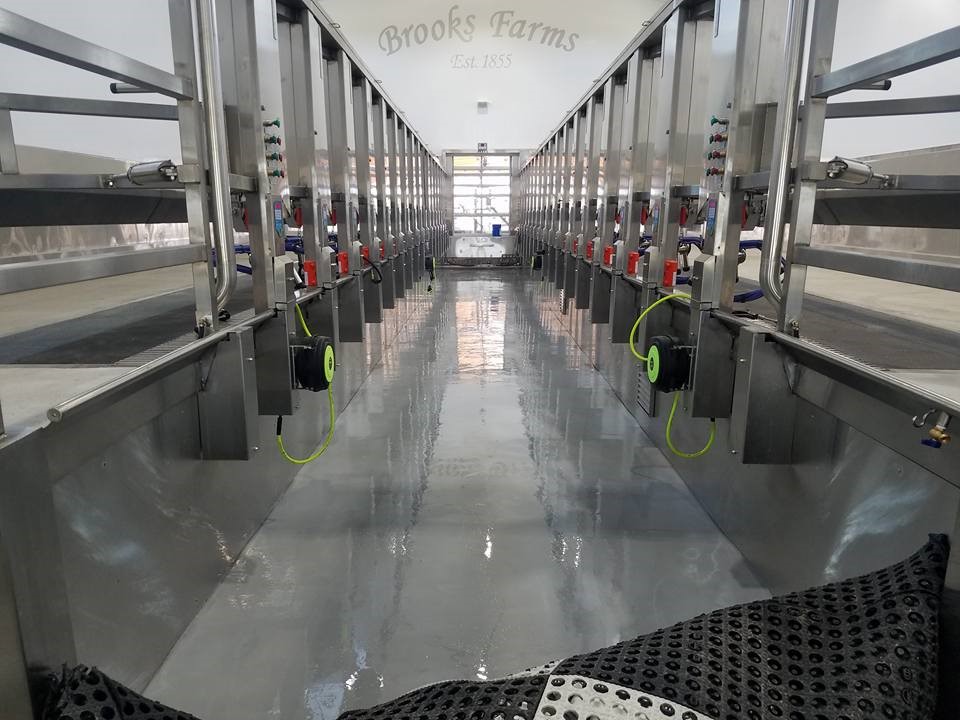
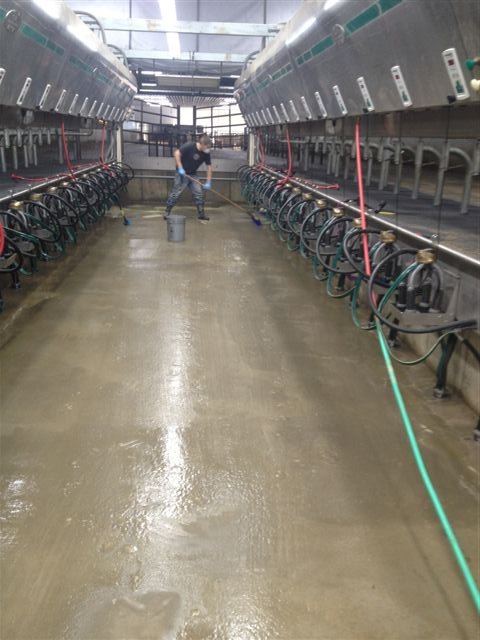
Animal housing produces a genuinely aggressive interior environment: continuous high humidity from respiration and waste, ammonia in poultry and swine houses, and regular wash-down in dairy parlors. Ammonia and moisture together attack galvanizing quickly, and the animals guarantee the humidity never lets up.
Condensation dripping onto livestock and bedding is not just a corrosion issue — it is an animal health and air quality issue. Producers who fix the condensation usually report the ventilation and the bedding both improve.
Spec: Underside closed-cell foam to eliminate condensation, top side 7001 Primer and OR-80SLM at 50–60 mil. Verify chlorides below 7 µg/cm² in wash-down areas before coating.
Potato, Produce & Cold Storage
Storage buildings hold a controlled temperature and humidity for months at a time, which makes them the most demanding condensation case in agriculture. Potato storage in particular runs high humidity by design — the crop requires it — under a steel roof sitting at outdoor winter temperature.
The condensate drips directly onto stored crop, and the resulting spoilage costs more in a single season than the roof assembly does. Foam on the underside is not an energy upgrade here; it is crop protection. On the exterior, the membrane stops the leaks and adds reflectivity that reduces the cooling load.
Spec: Closed-cell foam to the underside of deck and purlins at full continuity, exterior 7001 Primer and OR-80SLM at 60 mil. Consider tapered foam on top where the low-slope roof ponds.
Warehouses & Distribution Centers
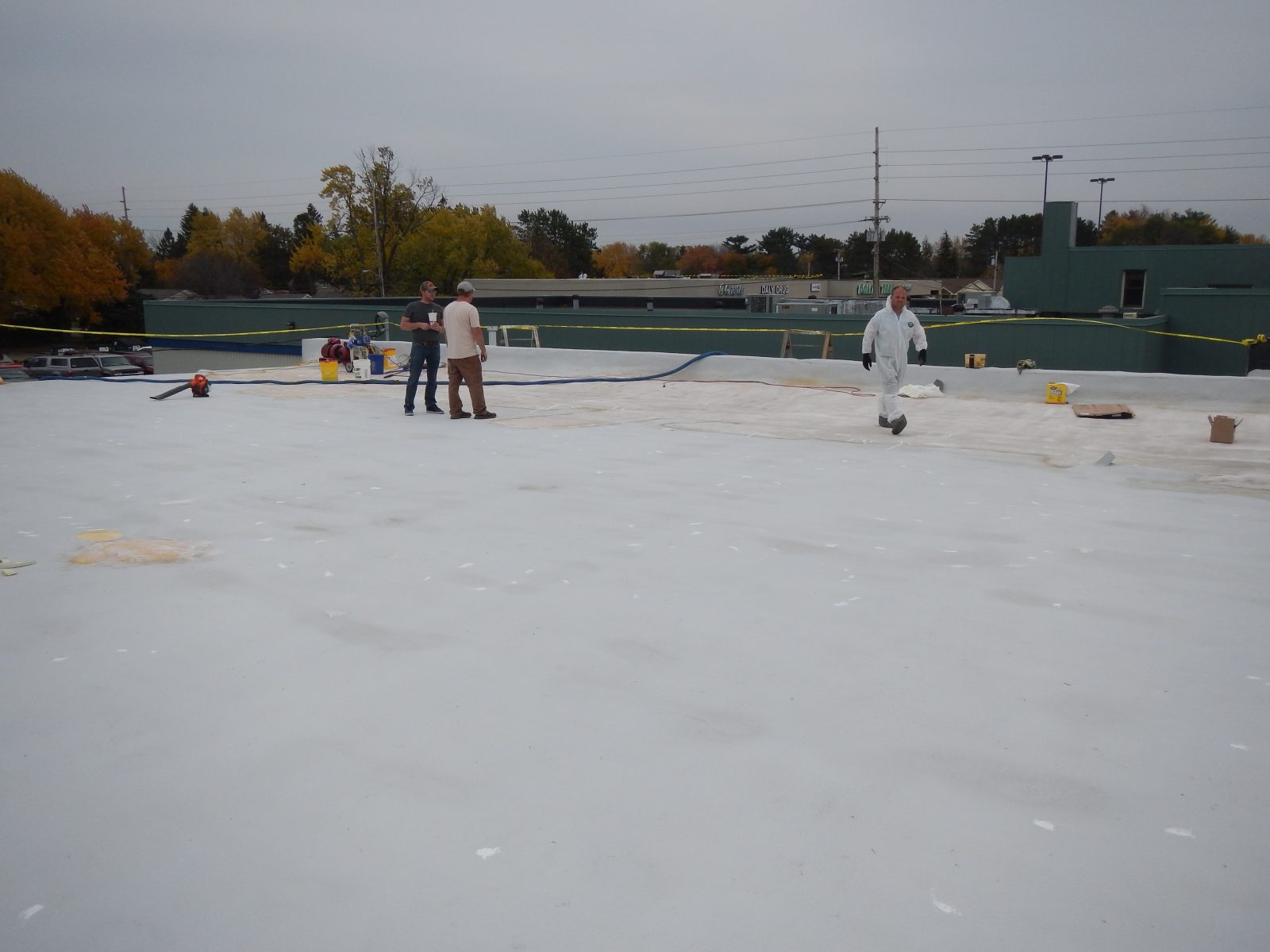
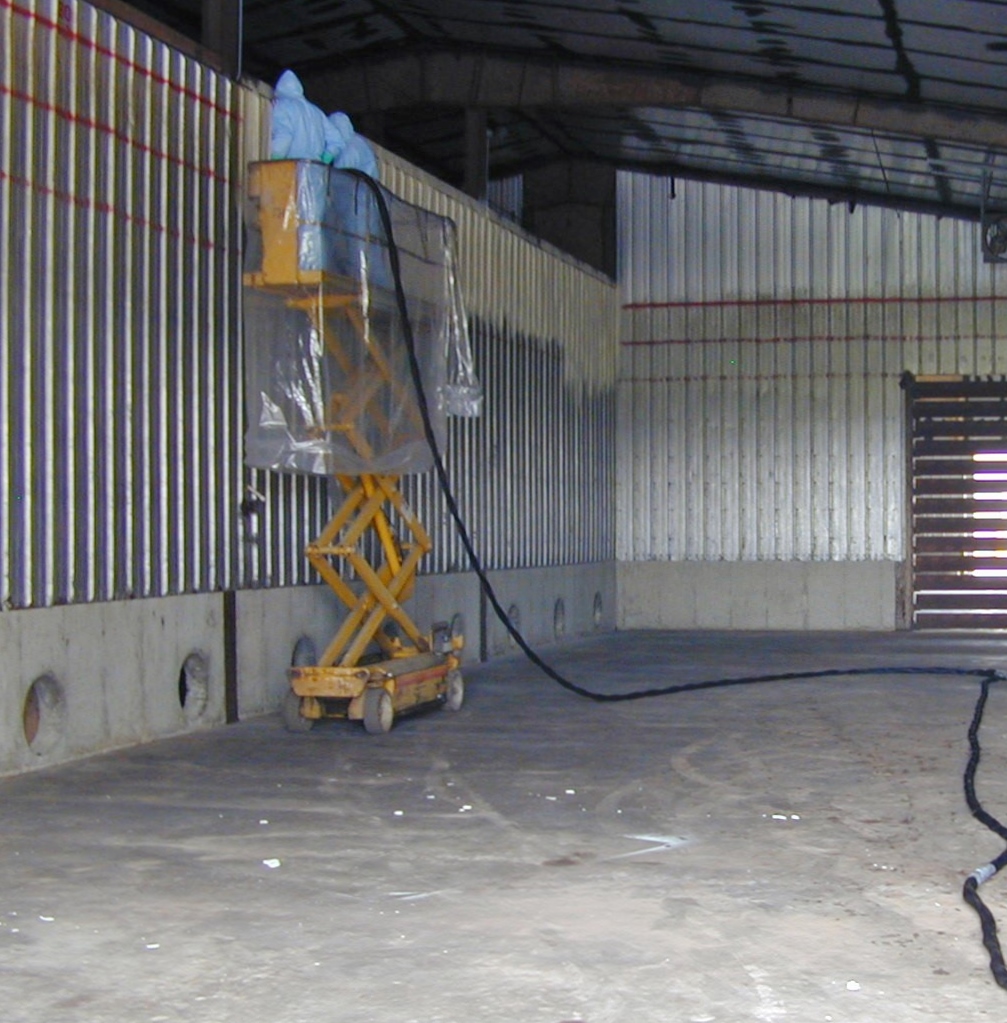
Large-footprint commercial roofs are an operations problem before they are a roofing problem. Tear-off on an occupied distribution center means racking covered, aisles closed, and inventory at risk from a roof that is open to weather in sections.
Restoration coating happens above the building without opening it. The membrane goes on section by section and each section is weathertight within a minute of being sprayed. Add tapered foam where the roof ponds around drains and units, and the energy savings on a conditioned building of that size are measurable.
Spec: 7001 Primer, OR-80SLM at 50–60 mil field, OR7K at 60–80 mil on curbs and penetrations, FJ1 at 80–100 mil in service walkways between rooftop units.
Other Steel Buildings on the List
- Equipment sheds and machine shops — coating the roof and the exposed steel structure in one mobilization
- Grain handling and ag processing buildings — dust, humidity, and continuous vibration
- Food processing plants — wash-down chemistry and chloride verification before coating
- Standing seam steel roofs — clips and seams encapsulated, movement absorbed by the membrane
- Riding arenas and horse barns — condensation control on large unheated spans
- Steel roofs with solar arrays — coating around and under an array that cannot economically be removed
- Ridge caps, gable and eave terminations — the details that leak first on every steel building
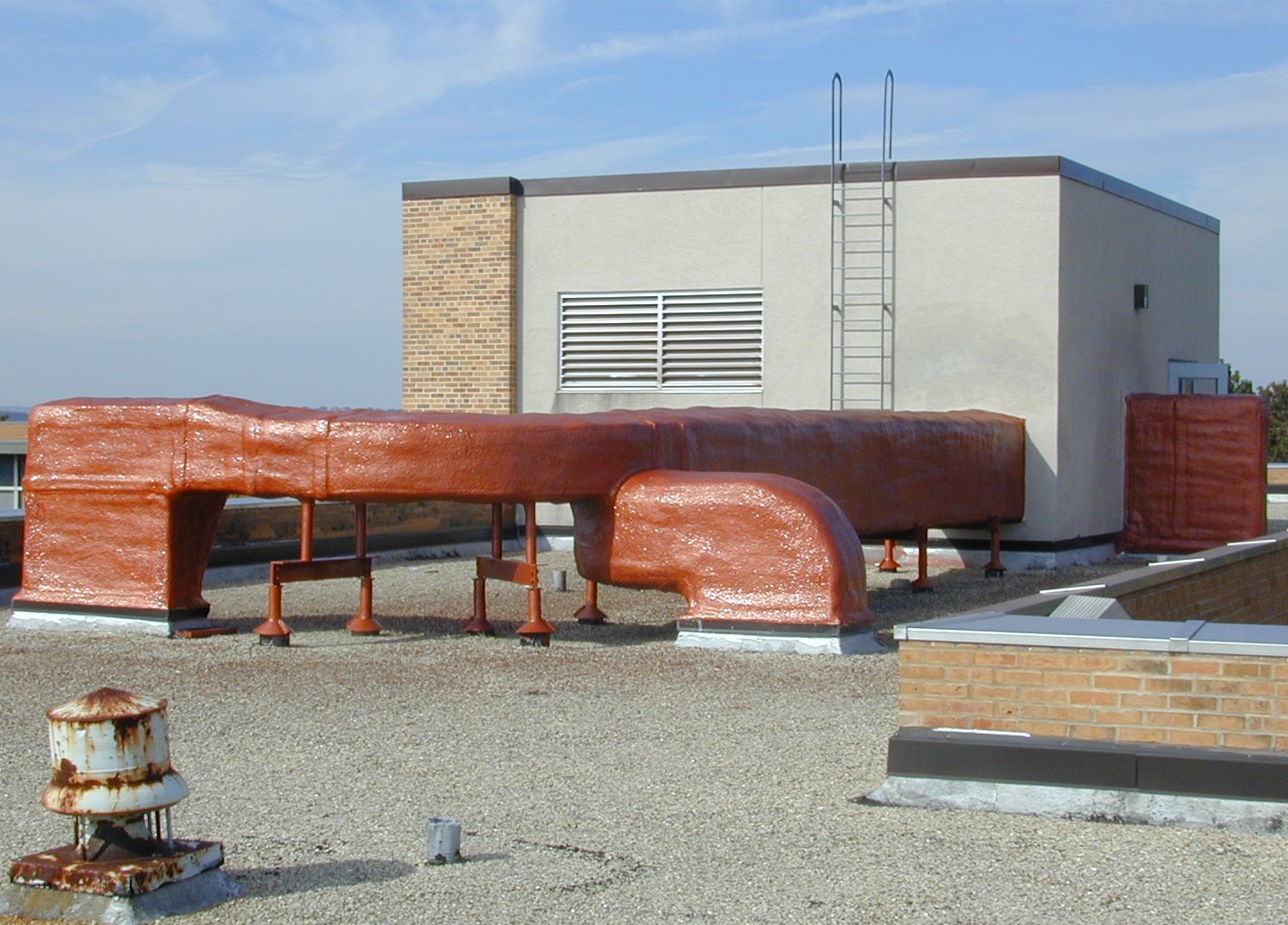
- Roof-mounted equipment curbs — retrofit HVAC and exhaust penetrations sealed continuously
Is It a Leak or Is It Condensation?
If the water shows up on cold mornings and there is no stain path from a fastener, it is probably condensation — and the fix is on the inside, not the outside. Describe what you are seeing and we will help you tell the difference before you spend money on the wrong side of the roof.
Ask an ApplicatorGet a Steel Roof Spec & Quote
Tell us about your project and we will follow up with product details, technical data sheets, and pricing.