Steel Roof Coating for Commercial, Industrial & Agricultural Buildings
Steel roofs almost never fail through the panel. They fail at the screw, at the lap, and on the underside where warm moist air condenses on cold steel all winter. OR-80SLM Silver Lining Membrane — pure polyurea, Miami-Dade approved — retires every fastener and lap on the roof at once, and closed-cell foam handles the side you cannot see.
Get a Steel Roof Spec & QuoteWhere Steel Roofs Actually Fail
The Screws Give Out Before the Steel Does
An exposed-fastener steel roof has thousands of screws, each with a rubber washer that hardens, cracks, and stops sealing in ten to fifteen years. Panel movement elongates the holes. Re-screwing buys a few seasons. A sprayed membrane buries every fastener head and washer under continuous elastomer and takes them off the maintenance list permanently.
Laps Wick Water Uphill
Side laps and end laps draw water in by capillary action regardless of slope, and once it is under the panel it corrodes the cut edge and the substrate where nobody can see or paint it. A monolithic membrane eliminates the lap as a feature of the roof rather than trying to re-seal it.
Condensation Attacks From Underneath
In livestock barns, potato and produce storage, wash-down plants, and any heated building under a cold steel deck, moist air condenses on the underside and rains back down. Coating the top does nothing about it. Closed-cell spray foam on the underside stops the dew point from ever reaching the steel.
Red Rust Does Not Have to Mean Replacement
Tight, well-adhered surface rust can be power-tool cleaned to SSPC-SP3 and encapsulated. The membrane isolates it from oxygen and moisture and stops the reaction. Scale, flaking, and section loss are a different conversation — and we will tell you which one you have.
Steel Buildings We Coat
Exposed-fastener panel, standing seam, bar joist and steel deck assemblies — commercial through agricultural.
- Pole barns & post-frame buildings
- Commercial pre-engineered metal buildings
- Bar joist & steel deck roofs
- Livestock & dairy barns
- Poultry houses
- Potato & produce storage
- Cold storage & food processing
- Warehouses & distribution centers
- Equipment sheds & machine shops
- Grain handling & ag processing
The Steel Roof System
What goes on top, what goes underneath, and how the prep changes with the condition of the panel.
Count the Fasteners on Your Roof
A 60 × 120 exposed-fastener steel building carries somewhere in the range of five to eight thousand screws. Every one of them is a hole through the roof, and every one of them is sealed by a small rubber washer that was expected to stay flexible outdoors, in UV, through freeze-thaw, for the life of the building.
They do not. Washers harden and crack, typically starting somewhere between year ten and year fifteen. The screw itself backs out slightly as the panel expands and contracts through daily and seasonal cycles, and the hole elongates around it. Now you have a hole with a hardened washer over it and a panel moving against it, several thousand times over.
The standard maintenance answer is to re-screw the roof with oversized fasteners and new washers. It works, for a while, and then you are doing it again — and the second time the holes are larger and the panel is thinner.
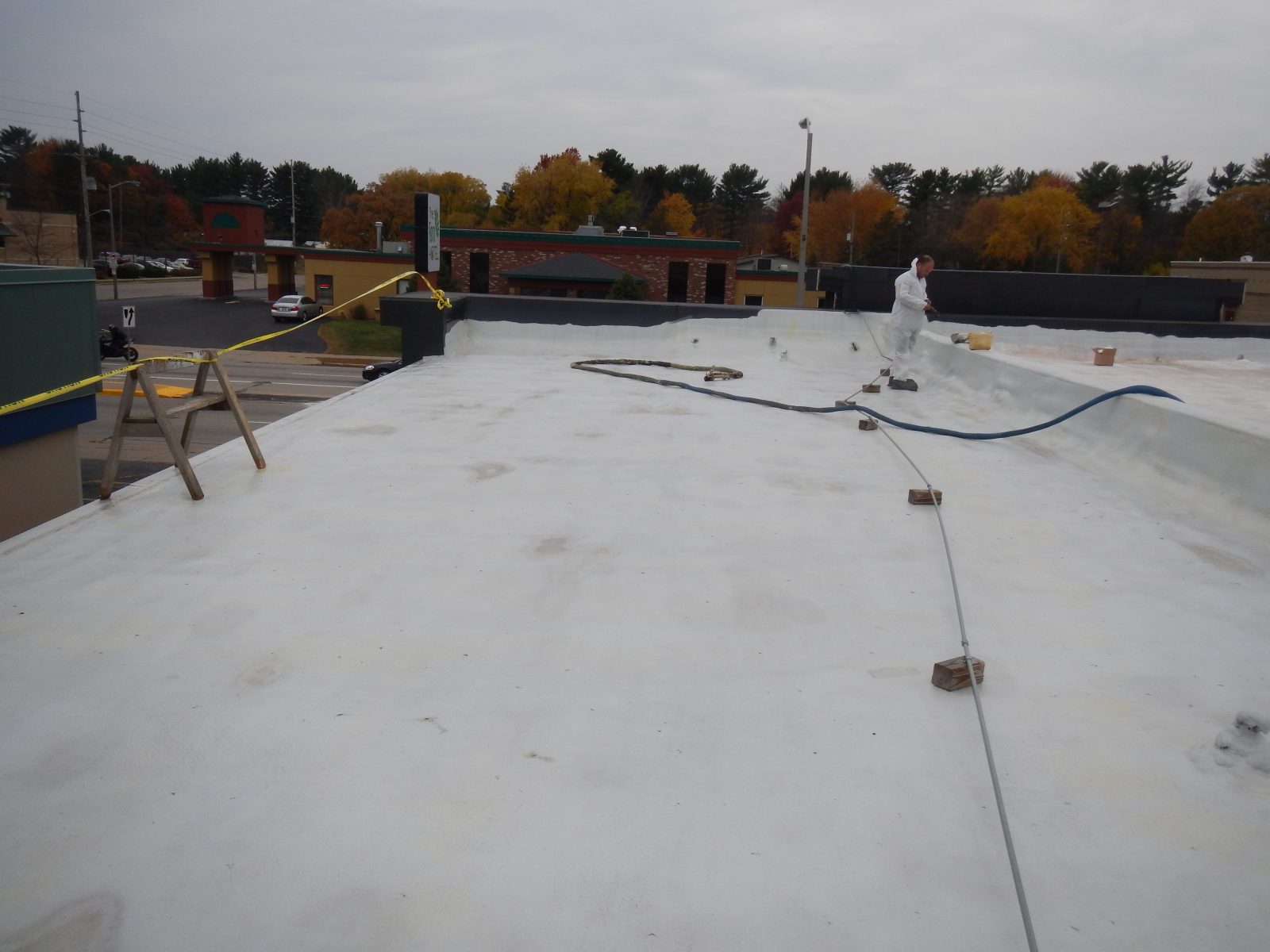
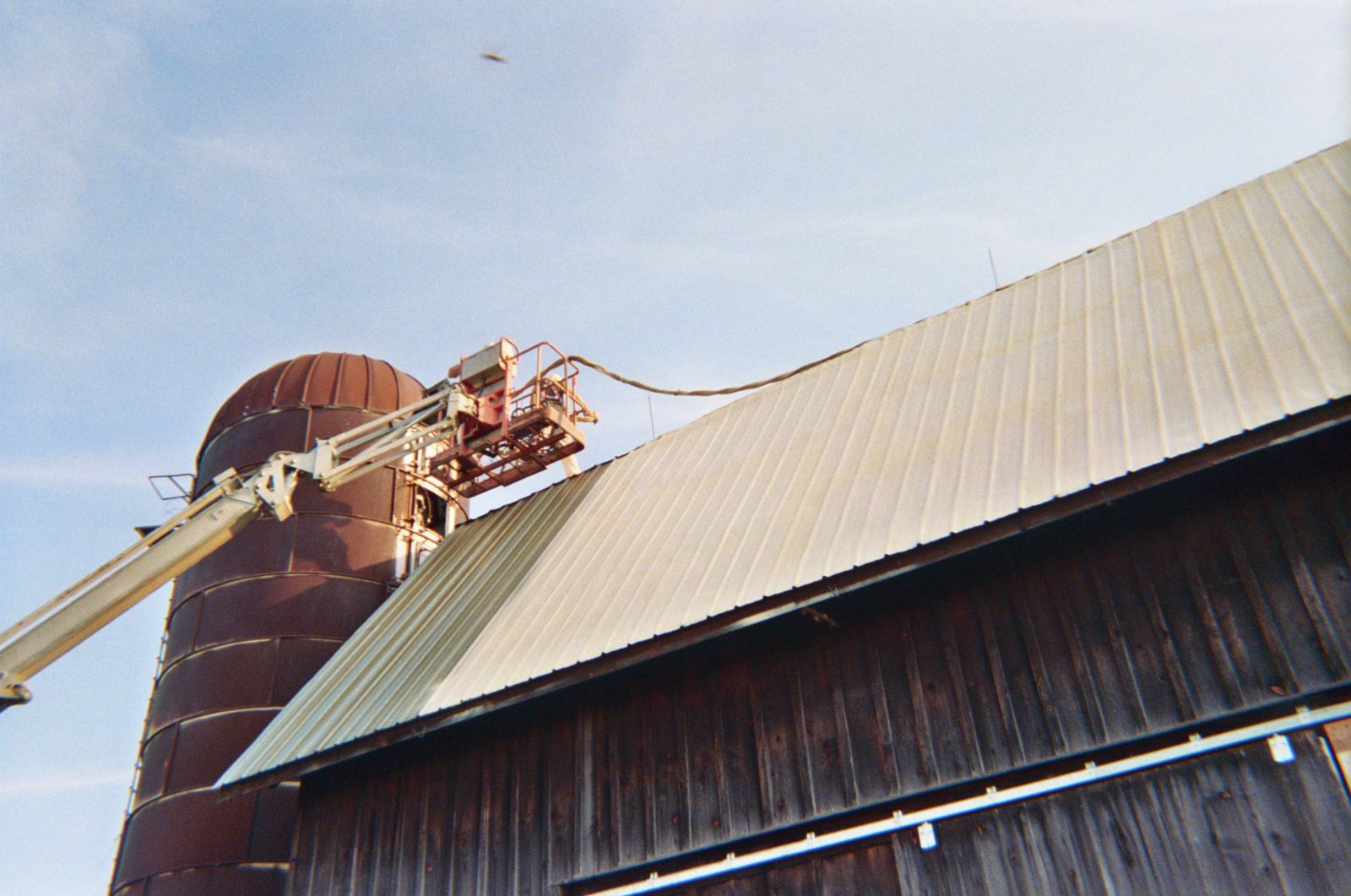
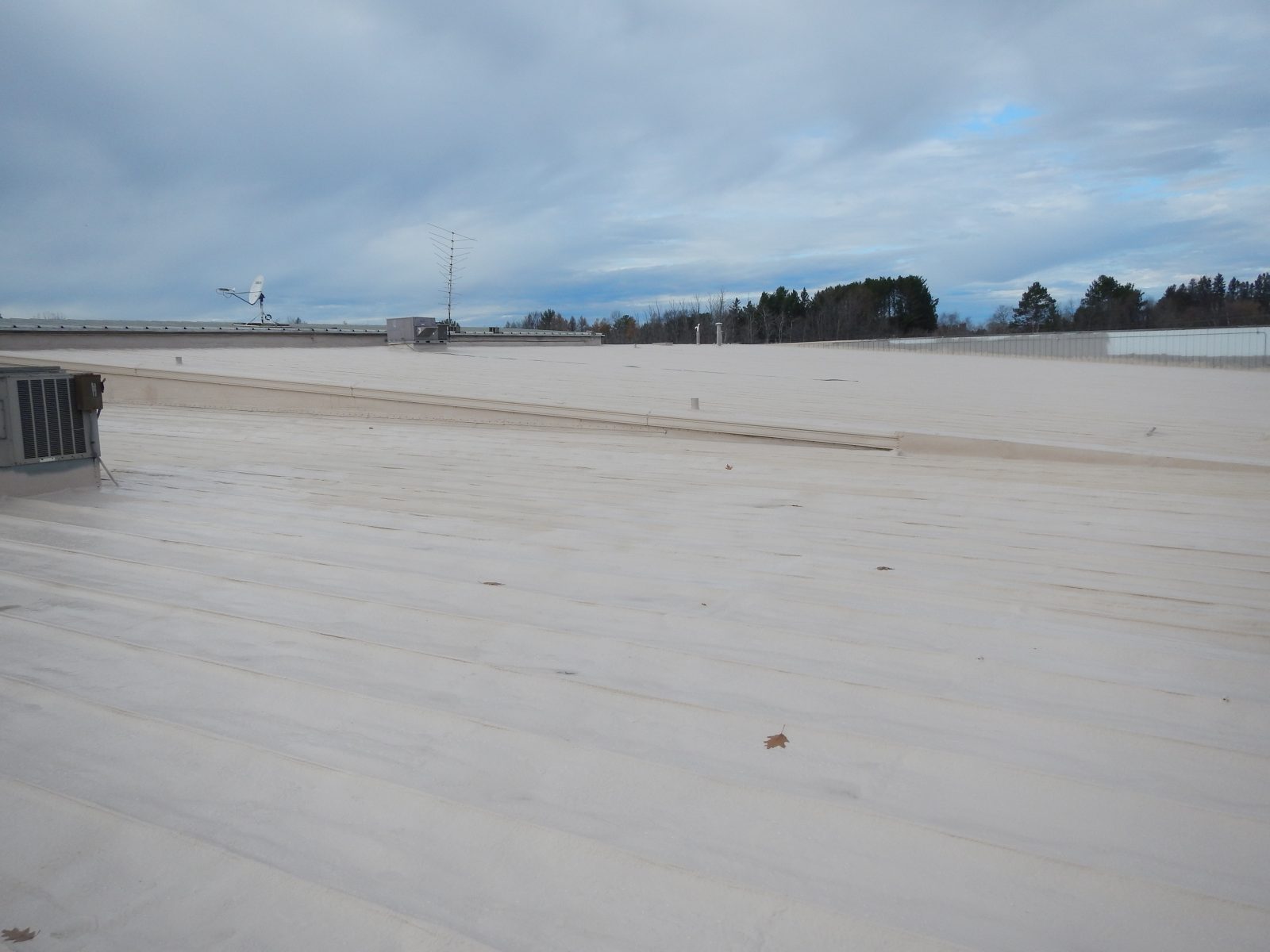
A membrane changes the terms. Spraying OR-80SLM across the roof buries every screw head, every washer, and every lap under a continuous elastomeric layer bonded to the panel. There is no longer a fastener penetrating the weather surface, because the weather surface is now above the fasteners. And because the membrane elongates 300–400%, it absorbs the panel movement that was working those screws loose in the first place.
The Problem on the Other Side of the Steel
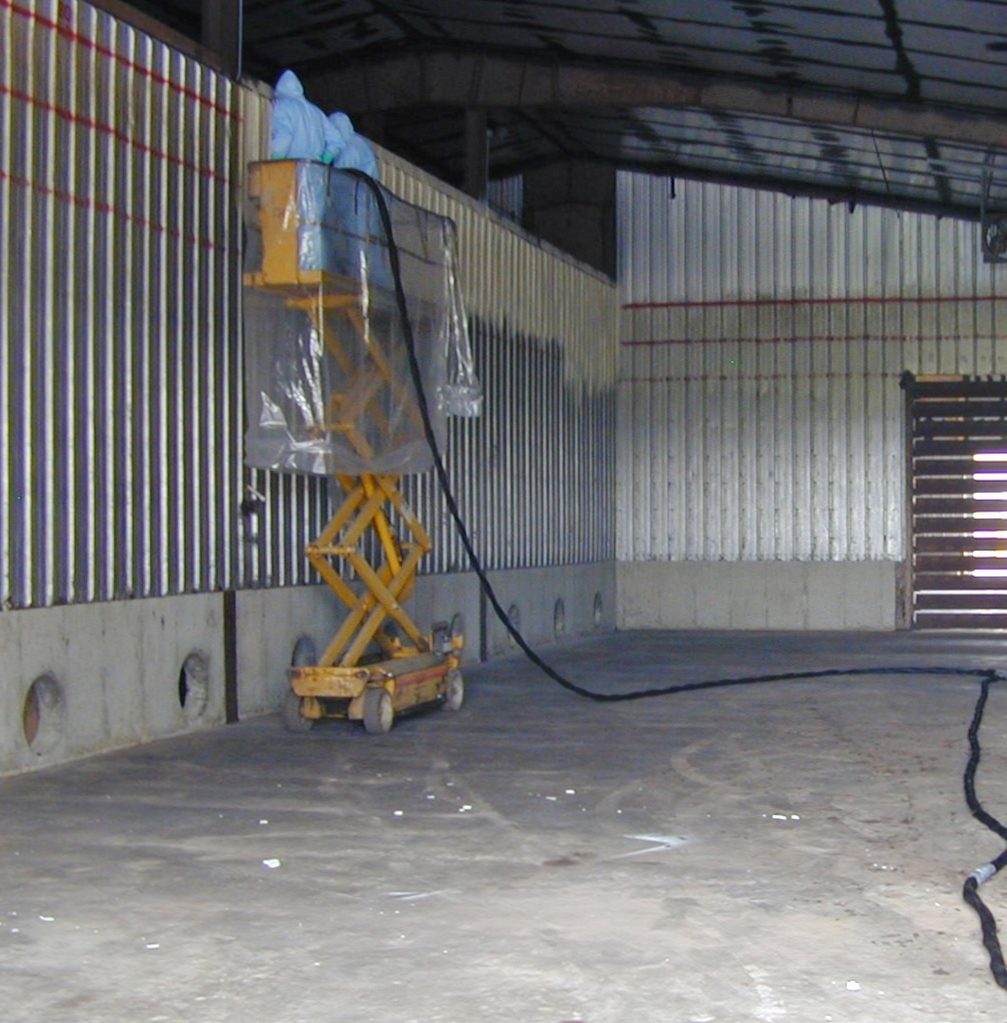
Walk into a dairy barn, a poultry house, a potato storage building, or a wash-down food plant on a cold morning and look up. If there is water dripping off the underside of the deck, that is not a roof leak. Nothing came through the panel.
Warm, moisture-laden air inside the building rises and meets steel that is at outdoor temperature. The dew point is reached at the metal surface and the moisture condenses there. It runs down the underside, drips on stored crop or livestock, corrodes the panel from the inside out, and rusts the bar joists and purlins it collects on. Producers spend years chasing it as a leak and never find one, because there is not one.
No coating applied to the top of the roof addresses this. The only real fix is to keep the steel from ever reaching the dew point, and that means insulation in direct contact with the underside — no air gap, no vapor path around the edges.
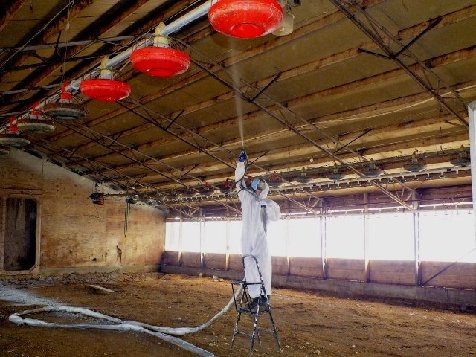
Closed-cell spray polyurethane foam does exactly that. Sprayed to the underside of the deck and around the bar joists and purlins, it seals continuously, acts as its own vapor retarder, and moves the dew point out of the steel and into the foam where nothing condenses. In agricultural buildings this is often more valuable than the roof coating — and the two together solve the whole problem.
The Steel Roof Numbers
Steel & Agricultural Roof Work
Tell Us What the Panel Looks Like Up Close
Panel type, coating condition, fastener condition, and whether it sweats on the inside. Those four things determine the prep spec, the primer call, and whether foam belongs in the scope. Send square footage too and we will run the takeoff. Contractors and dealers — include your region for wholesale pricing.
Request a Spec & PricingGet a Steel Roof Spec & Quote
Tell us about your project and we will follow up with product details, technical data sheets, and pricing.
Frequently Asked Questions
Steel Roof Questions
From facility managers, farm owners, and the contractors who work on both.
Condition & Preparation
Can it go over rust, or does the roof have to be blasted?
Over tight, well-adhered rust, yes — SSPC-SP3 power-tool cleaning is an accepted maintenance spec and the membrane isolates the oxide from oxygen and moisture, which stops the reaction. Over loose scale or flaking rust, no. The practical test is a scraper: anything it removes has to come off, or the membrane will take it along when it fails. New or heavily corroded panel gets SSPC-SP6 commercial blast with a 2–4 mil profile.
My roof is galvanized. Does that change anything?
Yes, in two ways. Galvanized and Galvalume surfaces do not accept a direct polyurea bond reliably, so 7001 Primer is required rather than optional. And aged zinc surfaces carry chalk and white rust — zinc oxidation products — that must be pressure washed off first. Prime a chalky panel and you have bonded to the chalk.
How bad is too bad? When should I replace instead?
Perforation you can put a screwdriver through, widespread section loss, panels that flex alarmingly underfoot, or purlins and joists with structural corrosion. A membrane is waterproofing, not steel. We will tell you when the honest answer is replacement — and on bar joist buildings especially, get the structure evaluated, because joists have very little material to lose before it matters.
Do the fasteners need to be replaced before coating?
Any screw that is backed out, stripped, or spinning gets replaced or upsized first — the membrane needs a fastener that is actually holding the panel down. Screws that are tight but have hardened, cracked washers do not need replacing; the stripe pass and field membrane encapsulate the head and washer completely, and from that point the washer is no longer doing any sealing work.
Condensation & Insulation
Water drips off the underside of my roof. Will coating the top fix it?
No — and this is the most important question on this page. If the water appears on cold mornings, there is no stain path from a fastener, and it is worst in the parts of the building with the most humidity, it is condensation, not a leak. Coating the exterior does nothing about it. The fix is closed-cell spray foam in direct contact with the underside of the deck, which moves the dew point out of the steel.
Can I just add batt insulation or a vapor barrier under the roof?
It rarely works on a steel deck. Batts and hung vapor barriers leave air paths at the edges, around purlins, and at every penetration, and moist air will find them and reach the cold metal behind the insulation — where it condenses invisibly. Closed-cell foam works because it is adhered continuously with no gap and is its own vapor retarder. Continuity is the whole mechanism.
Should the foam go on top of the deck or underneath?
Depends on the problem. Underneath solves condensation and is the ag and food-processing answer. On top adds R-value, allows tapering to re-slope a ponding low-slope roof, and puts the insulation inside the weather envelope — the commercial and industrial answer. Some buildings get both. Tell us what you are trying to solve and we will tell you which side.
Can spray foam be left uncoated on top of a roof?
No. Closed-cell foam has no UV resistance and very little impact resistance. Left bare it degrades from the surface down and any foot traffic damages it. The polyurea membrane over it is what makes the assembly a roof — OR-80SLM at 60 mil minimum over foam, with FJ1 in walkways.
Cost, Coverage & Application
How much material does a corrugated steel roof take?
More than the plan dimension suggests. At 100% solids one gallon yields 1,604 mil-sq-ft, but a corrugated or ribbed panel has 15 to 25 percent more developed surface area than its footprint, and the lap and fastener stripe passes add material on top of the field spec. Send us the panel profile and square footage and we will run the real takeoff.
How does this compare in cost to replacing the steel roof?
Restoration is typically a fraction of tear-off and re-panel, and it avoids disposal, structural exposure, and shutting down the building. For ag operations that matters most seasonally — you can coat a storage building between crops in a way you cannot re-roof it. It also usually books as maintenance rather than capital. Where the panel is genuinely gone, replacement is the right answer and coating is not a cheaper version of it.
Can the building stay in use during the work?
Exterior coating, generally yes — the work happens above the building and each sprayed section is weathertight within a minute. Interior foam work requires the space to be clear during application and for a ventilation period afterward, which on an ag building usually means scheduling between crops or between herd movements. We plan around it.
What equipment is required, and can my crew do it?
A plural-component proportioner with a heated hose — Graco Reactor E-20 or E-30 class or equivalent — for both the membrane and the foam. If you already run a foam rig you are most of the way there. If you have no equipment we can refer an applicator in your region or talk you through adding the capability, including training and job support on the first roofs.
Question About a Specific Building?
Panel type, age, what you are seeing inside, and square footage. That is enough for a real answer.
Ask a Question